
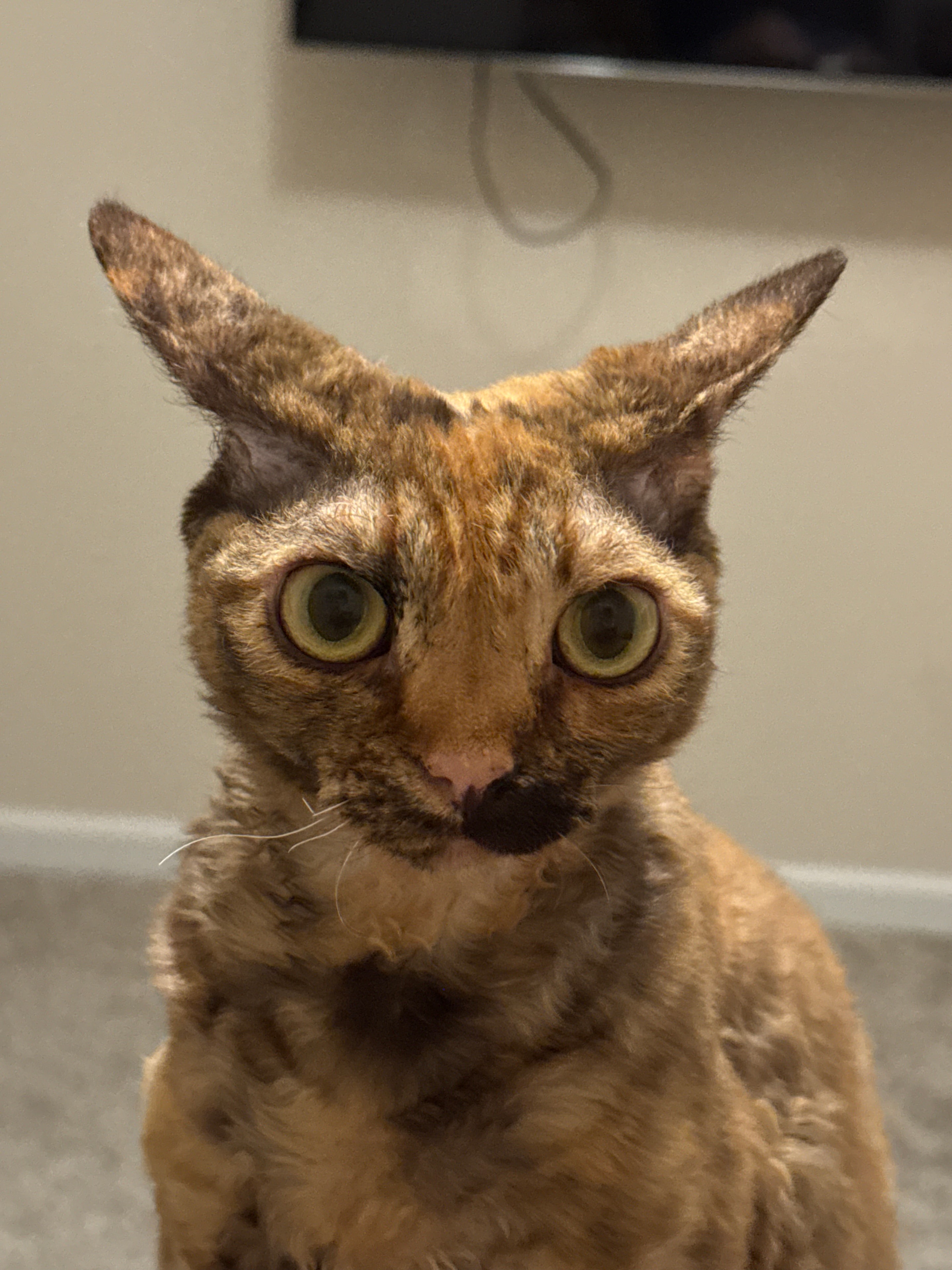
Emma & the Gang
The furry editors behind every story. They don't get a byline, but they should.
Every writer needs a muse — or four. Meet the cats who keep my chair warm, my keyboard occupied, and my word count lower than I'd like it to be.
The Breed Behind the Chaos
I'm completely, hopelessly in love
with the Devon Rex
Those Ears
Enormous. Satellite-dish wide. Set low on the head like they're picking up signals from another dimension. The Devon Rex ear is not subtle — and neither is the cat attached to it.
The Curls
A Devon Rex coat is soft, wavy, and utterly unlike anything else in the cat world.
Part Cat, Part Monkey
They climb everything. They are natural jumpers — and their favorite landing spot is your shoulder. Devon Rex cats will leap up, drape themselves across your neck, and ride around the house like it's the most normal thing in the world.
The Purr Effect
Science agrees: cat purrs vibrate at 25–50 Hz — a frequency shown to promote bone healing, lower blood pressure, reduce stress, and ease anxiety. In other words, Emma and the gang aren't just adorable. They're medicinal.
Born in Cornwall
The Devon Rex is a relatively young breed, born from a single curly-coated kitten named Kirlee, discovered in Devon, England in 1960. Every Devon Rex alive today traces their lineage back to that one extraordinary little cat.
They Have Opinions
Devon Rex cats are vocal — and they are not shy about it. They chirp, trill, chatter, and occasionally produce sounds that have no business coming out of a cat.
The Personality
Mischievous, playful, and wildly social — Devon Rex cats are often called "dog-like" because they greet you at the door, learn tricks, and genuinely want to be wherever you are. Emma brings me her brown ball each morning. I throw it and she brings it back.
"I didn't plan to become a Devon Rex person. It just happened. I met Emma and that was all it took. She was my first potato chip, and like real potato chips, I couldn't stop at one."
— K. A. Moll, on the matter of Devon Rexes
Watch
Emma plays fetch like a pro
She brings the ball. I throw it. She brings it back.
The Gallery